
5 Elements Every High-Converting Website Must Have in 2026
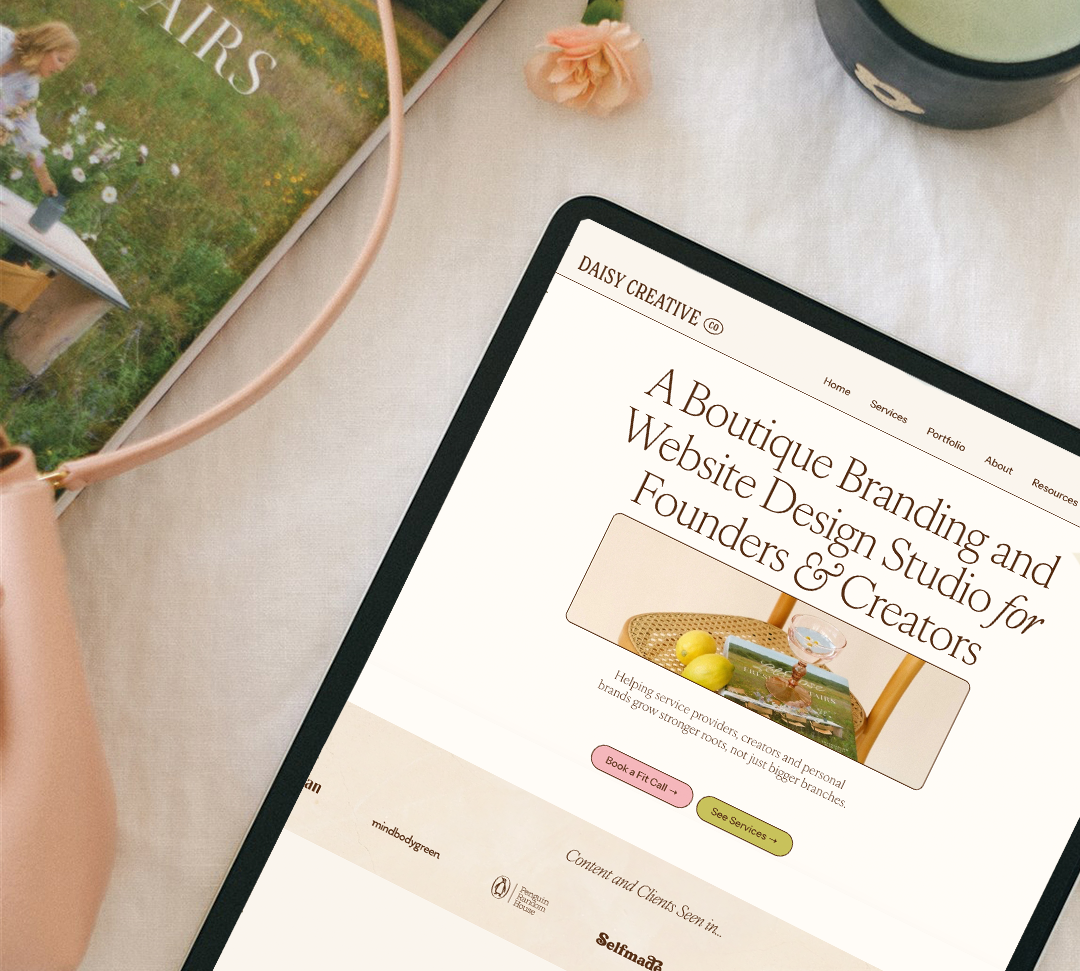
A few months ago, my friends and I met for lunch and then stopped at a locally-owned home boutique afterward.
When we walked in, we were immediately greeted by the store manager and the smell of a green tea diffuser. The space was beautifully designed with wooden displays, curated home goods, hand-picked gifts, and gourmet pantry items.
While we browsed, the manager offered us a taste of wine and casually shared details about the products we were looking at. As my friend was checking out, she told us about upcoming store events and workshops.
That boutique wasn’t just selling products, it was crafting an experience.
And as an online creator, premium service provider, or personal brand, your website should do the exact same thing.
Your website should:
Warmly invite your clients into your brand with your visuals and messaging
Give your audience a small “taste” of your service and experience
Share the benefits and features of working with you
Offer clear next steps for staying connected with your brand
Now compare this to walking into a big-box chain like Home Goods or Bed Bath & Beyond. You’ll get minimal guidance and wonder around for 30 minutes hoping to find the thing you came for.
Your website is either the boutique or the big-box store. One builds trust, connection, and curiosity. The other leaves people feeling overwhelmed and indifferent.
In this blog, we’ll cover:
Why your website is more important than your social media presence
What’s Changed in Website Design in the Past 5 Years
5 Elements Premium, High-Converting Websites Need in 2026
The Most Common Website Mistakes Small Businesses Make
Why Your Website Is More Important Than Your Social Media Presence
Your website is more important than social media because you own it. The traffic, the messaging, the experience, it all belongs to you.
Social media is rented space. You don’t control the algorithm, the reach, or the rules. And with attention spans shrinking, it’s harder than ever for small business owners to compete there.
Your website, on the other hand, is your home base. It’s where conversions happen, where people make decisions, and where first impressions stick.
A premium business needs a premium website. Period.
What’s Changed in Website Design in the Past 5 Years
A lot. And it matters for service providers especially.
1. User Experience Standards are Higher
People expect beautiful, clean, intuitive sites. Clunky navigation or walls of text can lose a potential client in seconds.
2. The Bar for Quality Has Skyrocketed
With AI, better templates, and drag-and-drop builders, it’s never been easier to make an average website. But premium clients aren’t buying “average.” To stand out, your site needs strategy, clarity, and a brand experience that feels thoughtfully curated.
3. Story & Personal Brand Matter More
With more options than ever, clients buy from people they resonate with. Your personality, story, values, and philosophy play an increasingly huge role in conversions.
5 Elements of High-Converting Websites
These are the non-negotiables for premium service providers in 2026:
1. Simple Messaging
Your website should instantly answer: Who are you? What do you do? Who do you help? If a visitor can’t answer those questions in 5 seconds, you’ll lose them.
2. Trust Builders
Premium buyers need reassurance. You can build trust through:
Brand collaboration logos
Results (stats, before-and-afters, screenshots)
A credibility-building bio
Client testimonials
Press features or awards
3. Clearly Presented Offers
Your services shouldn't be hidden or hard to understand. Make it obvious what you offer and help your audience decide which service is right for them.
This includes:
A clear outline of what the service includes
Who it’s for
Who it’s not for (optional but powerful)
Pricing or starting rates
FAQs
A newsletter opt-in for people not ready to buy
4. Strategic CTAs (Clear Next Steps)
A high-converting website gives direction, not options overload.
Your CTAs should:
Stand out in color and design
Be repeated throughout the page
Reduce friction (short forms, simple questions)
Clearly tell people what they’re doing next
5. Thoughtful, High-End Design
Your design should make your brand feel premium and make it easy for users to take action. Avoid large blocks of text, clutter, and outdated layouts.
Non-negotiables include:
Mobile-friendly design
Ample white space
Clear hierarchy
High-quality photos
Consistent branding
Your website is more than a digital storefront, it’s the heart of your brand experience. It’s where potential clients decide whether they feel connected, confident, and ready to take the next step with you.
In 2026, high-converting websites aren’t the ones packed with fancy animations or endless pages. They’re the ones that feel intentional, inviting, and premium… the ones that guide your audience the same way a curated local boutique would.
When your messaging is simple, your design is thoughtful, and your next steps are crystal clear, you make it easy for the right clients to choose you. And when you remove the friction, confusion, and “big-box store energy,” your website becomes a powerful tool for growth, not just a pretty place online.
And if you’re ready to elevate your website into a high-converting, boutique-level brand experience, download the free Boutique Brand Guide here. It’ll walk you through my step-by-step process for building a high-quality boutique brand.